
Arrest Records in Columbus County
A Columbus County arrest can create several records at once. The arresting sheriff, town police department, or State Highway Patrol prepares an agency report. If the person enters county detention, jail staff create a separate booking entry with intake, charge, bond, and release data. Fingerprints can support an arrest cycle in the North Carolina State Bureau of Investigation repository. A magistrate and the courts then create judicial records if criminal process follows.
The Columbus County Sheriff's Office holds its own incident and arrest reports as well as county booking records. Whiteville, Tabor City, Chadbourn, Fair Bluff, and Lake Waccamaw police hold the reports they create. The State Highway Patrol remains the source for its trooper records. This division matters because asking the sheriff for a city police narrative may produce no record even when the sheriff accepted the same person into detention.
Use the record that fits the question. A booking entry is best for intake and bond, the agency report for public event facts, and the court file for the charge's final path.
Columbus Arrest Agencies Compared
Start with the agency named on the citation, booking entry, or court case. The report follows the officer's agency, not the place where the person was later held. Columbus County detention may have a booking record for a town arrest without having the town officer's full incident narrative.
Columbus County Sheriff
817 Washington Street
Whiteville, NC 28472
910-642-6551
Whiteville Police
317 S. Madison Street
Whiteville, NC 28472
910-642-5111 Records
Tabor City Police
1108 E. 5th Street
Tabor City, NC 28463
910-653-3149
Chadbourn Police
602 N. Brown Street
Chadbourn, NC 28431
910-654-4146
For a state trooper arrest, use the official Highway Patrol channel. A written request should give the incident number if known, the date and place, the involved agency, and the format sought. Ask for the public portions and a cost estimate. Columbus County research did not confirm a sheriff copy-fee schedule, so the custodian must quote any cost.
Columbus County Arrest Lookups
No one official public database supplies the full Columbus County arrest trail. The strongest route is a sequence that begins with current custody, checks the court filing, and then goes back to the agency that made the arrest. Use these channels in the order that fits the age and scope of the event.
- Identify the arresting agency and the approximate arrest date and place. That tells you which office holds the incident or arrest report.
- Open the sheriff's In Custody report, use browser or PDF find, and call detention at 910-640-6628 for very recent custody or a record that is not clear.
- Search North Carolina eCourts and Court Dates with Columbus County selected. A court entry may lag behind booking, so retry or call the Clerk at 910-641-4400.
- Ask the arresting agency for its report and the sheriff for the separate booking record. A Chapter 132 request can seek disclosable public portions when the online route is not enough.
- For your own cross-county North Carolina history, request the SBI fingerprint-supported Right to Review. It is a personal repository review, not a public name search.
The official Columbus County Sheriff app adds an interactive inmate search, Most Wanted, registry tools, notices, and alerts. The app can be useful when the downloadable report does not behave like a conventional search screen.
Columbus County Booking Fallback
The sheriff's official In Custody page shows the local approach: it links to a downloadable report rather than a stable public booking database.
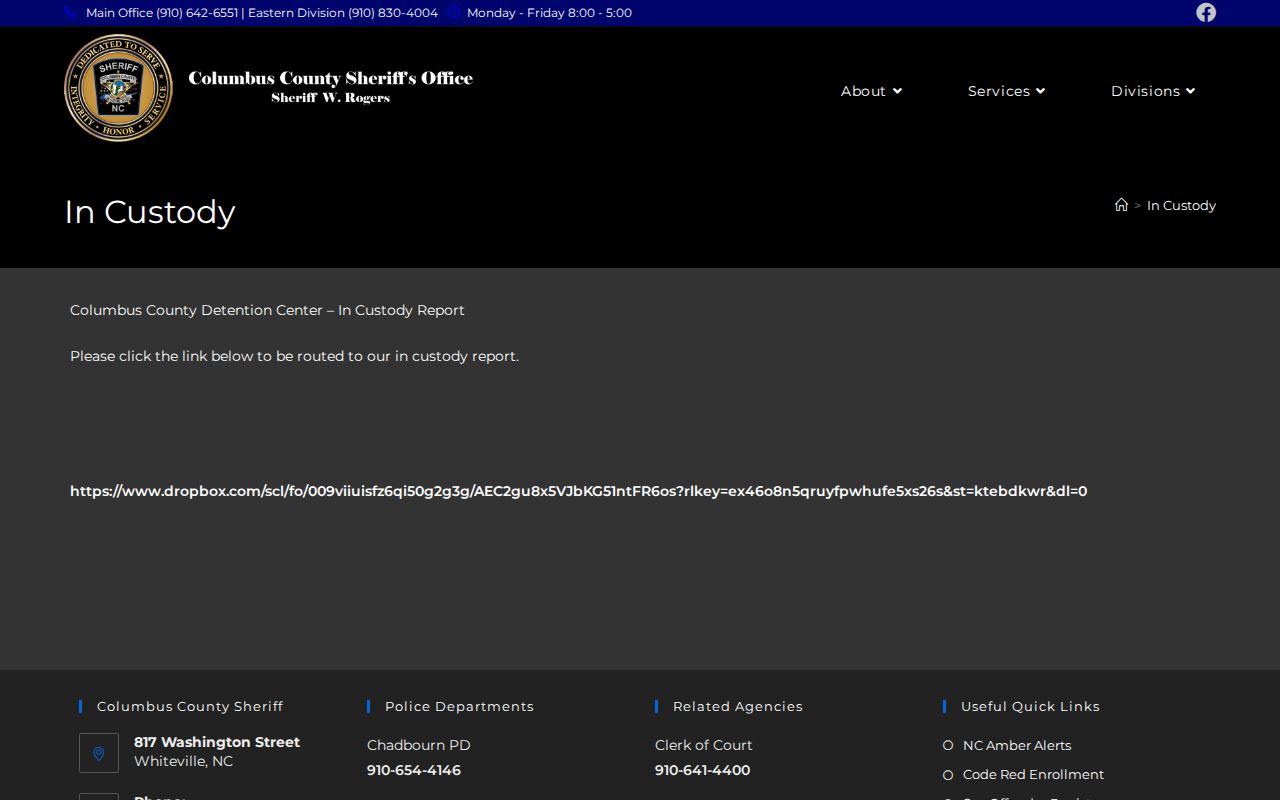
This layout makes PDF or browser find useful, but phone verification remains important for a very new Columbus County booking or a status that may have changed after the report was made.
Call detention at 910-640-6628 with the full name and approximate arrest date. The sheriff’s detention information page supplies the official facility rules. Ask for the booking number, initial charge, bond, current custody status, and release or transfer data that may be public. A missing name does not prove that no arrest occurred. The person may have been released, transferred, booked under a different name format, or not yet added to the current report.
Note: A current-custody report is a time-limited detention source, not a complete Columbus County arrest history.
Arrest Records: What They Contain
Agency reports and booking entries overlap, but their fields are not identical. The report may add an incident number, event location, allegations, involved officers, property or evidence, a narrative, and warrant or process data. The jail entry focuses on intake and custody. Protected victim, juvenile, medical, security, and personal data can be redacted.
| Booking number | The detention identifier for one custody event, distinct from the court case number. |
|---|---|
| Booking date and time | When jail intake was recorded, which can differ from the event or court filing time. |
| Arresting agency | The sheriff, town police, Highway Patrol, or other agency that created the arrest report. |
| Initial charges | Allegations recorded at intake; prosecutors may amend, replace, or decline them. |
| Bond | The type, amount, and status recorded after the magistrate's initial decision where public. |
| Booking photograph | An intake field that must be requested from the custodian; online release is not promised. |
| Release status | Custody, release, or transfer information as of the record's update time. |
Match any booking result to the court file by more than a name. Date, arresting agency, charge, and case number reduce the risk of confusing two people or two arrest cycles.
Columbus Arrest-to-Custody Timeline
A custodial arrest usually moves through intake identity and property, a booking photograph and fingerprints, entry of initial charges, safety and medical screening, and a magistrate's first bond decision. Classification follows for anyone held. The jail, court, and SBI receive different parts of this process on different schedules.
Record flow: Arresting agency › Columbus County booking › Magistrate › District or Superior Court › SBI disposition match
The county jail covers local pretrial and short-term custody. A sentenced person later transferred to the state system appears through North Carolina Department of Adult Correction data instead. The NCDAC Offender Public Information Search shows that distinct state-custody route.
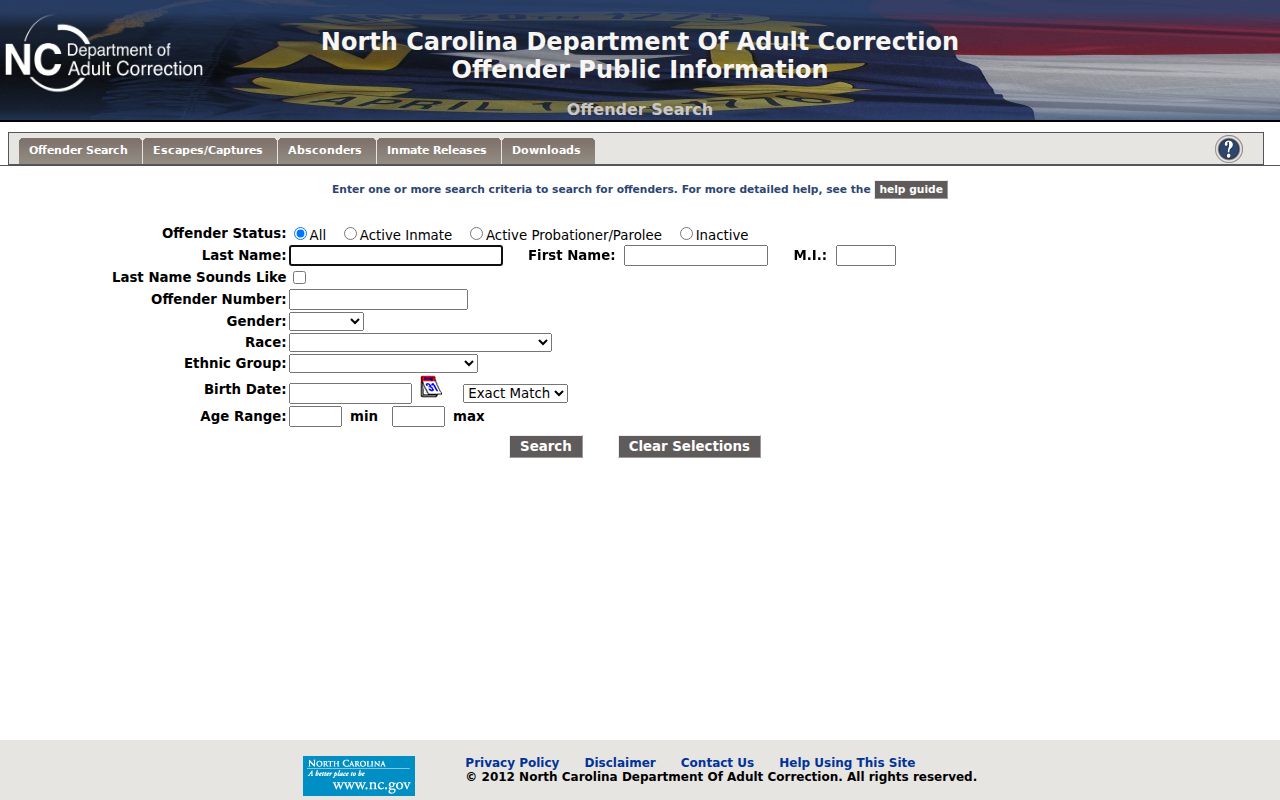
The state locator is useful after transfer or for a state correctional history, but it does not replace the Columbus County booking record, bond details, or the arresting officer's report. VINE can provide supported custody or release notifications, while the holding agency remains the source for confirmation.
| NCDAC search field | Use | Limit |
|---|---|---|
| Offender number | Most precise state identifier | Not a Columbus County booking number |
| Last and first name | Name-based state custody search | Verify identity with other fields |
| Gender and race | Narrow common-name results | Use only the live portal options |
| Birth date or age | Distinguish possible matches | Availability follows the current form |
Recent Columbus County Bookings
The downloadable In Custody report and detention phone line are the primary Columbus County channels for recent local custody. Filing in eCourts may come later. If the booking is too new for a court search, keep the booking number and retry, or ask the Clerk of Superior Court whether criminal process has been filed.
The official Columbus County Sheriff mobile app advertises an interactive inmate search alongside other sheriff tools.
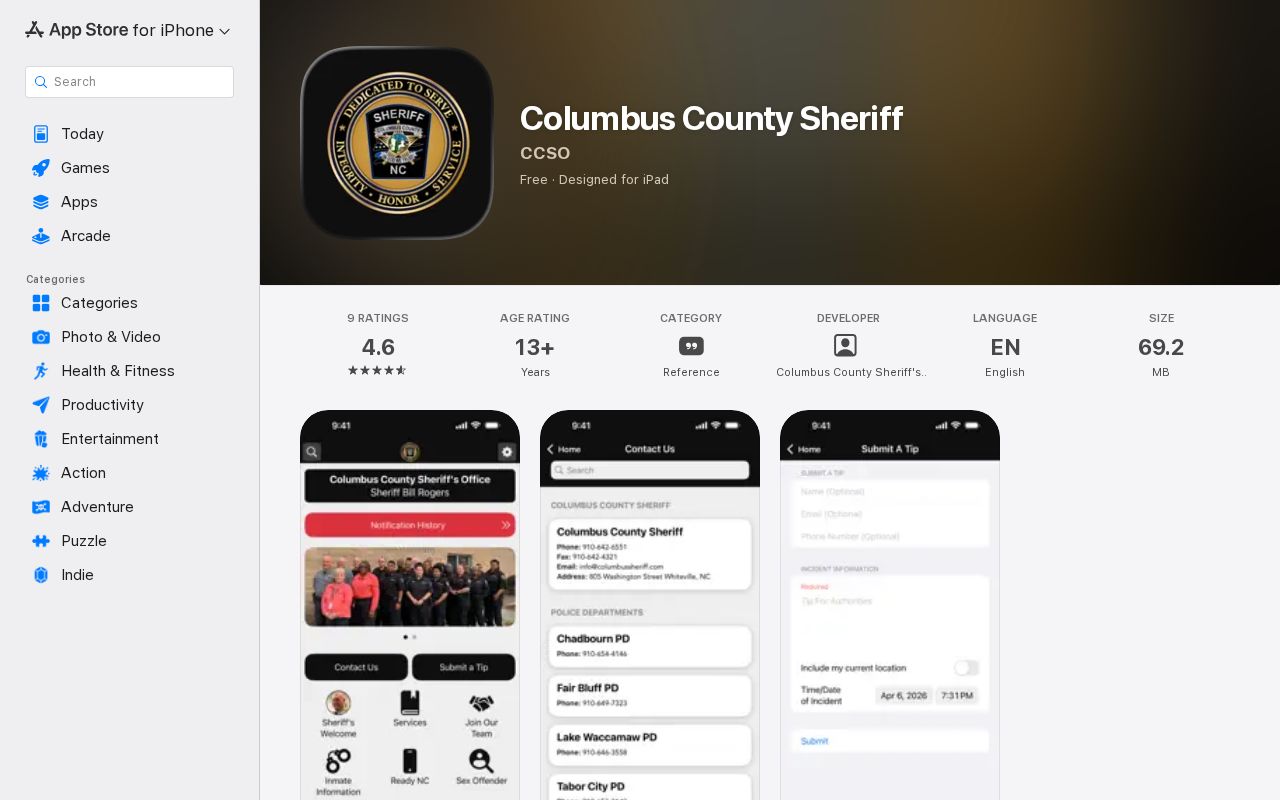
The app is a second official route when a reader needs a more interactive custody tool, while the detention office remains the source to confirm live status.
Booking logs usually emphasize people in custody now or in a recent report. Entries can roll off after release. An absence says nothing conclusive about an older Columbus County arrest, and release does not show whether the prosecutor dismissed, changed, or filed the charge.
Columbus County SBI Arrest Review
The SBI has no public name-search portal for a general Columbus County arrest check. For your own North Carolina repository record, its Right to Review process uses a completed ten-print FD-258 fingerprint card and a mail packet. The repository can link fingerprint-supported arrest cycles from more than one county to matched court dispositions.
The official SBI personal record review instructions explain the subject-only route.
This review is strongest for finding a missing or mismatched disposition in your own statewide file. It does not supply the full city police narrative or every document in a Columbus County court case. For a subject-only national record, the FBI publishes Identity History Summary instructions and an electronic request portal.
Local fingerprint capture can be booked through the sheriff's Permitium appointment service. The Columbus County fingerprint appointment page publishes a $10 local fee plus the vendor convenience charge.
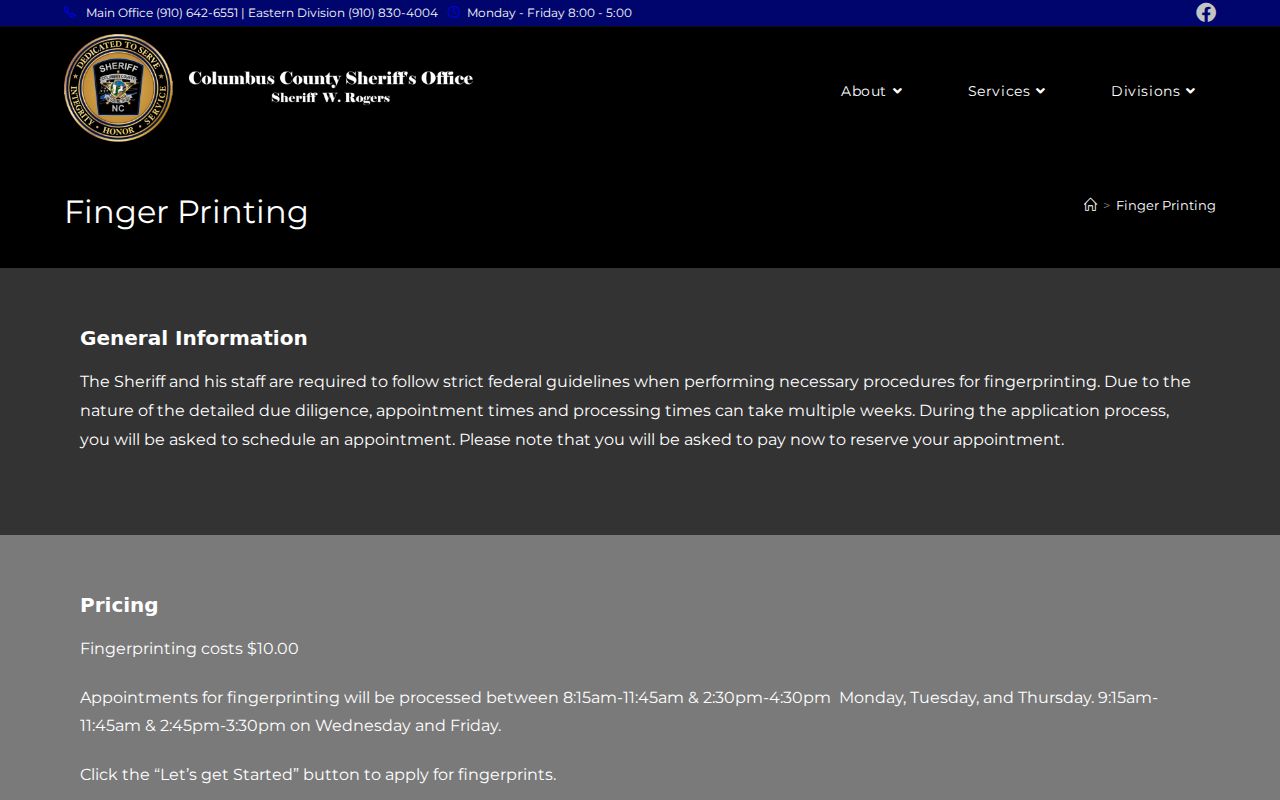
The page lists Monday, Tuesday, and Thursday appointments from 8:15 to 11:45 a.m. and 2:30 to 4:30 p.m., with shorter Wednesday and Friday windows. Verify the schedule when booking.
Columbus Booking IDs Explained
Three identifiers can appear in one Columbus County arrest trail. A booking number belongs to the jail intake. A court case number belongs to the prosecution. An SBI number identifies a person within the state repository. They serve different systems and should not be treated as substitutes.
- Booking number
- Use it with detention staff to locate one intake, bond, release, or transfer record.
- Case number
- Use it with eCourts or the Clerk to find charges, hearings, disposition, and judgment.
- SBI number
- Use it within an authorized or personal repository review to distinguish fingerprint-linked identity.
- Incident number
- Use it with the arresting agency to request its report and public narrative portions.
A date, agency, and charge should accompany an identifier when possible. If the initial booking charge and court count differ, read the filed charge and final disposition rather than assuming the jail entry was updated.
Arrest Records vs Conviction Records
An arrest record documents that an agency took action and, if custody followed, that a booking occurred. A conviction record comes from a court judgment of guilt. The two documents have different custodians, dates, identifiers, and legal meaning. Follow the case in the Columbus County court file before drawing any conclusion about the outcome.
| Arrest record | Conviction record |
|---|---|
| Created by an arresting agency and jail | Created through District or Superior Court |
| Shows an arrest or booking event | Shows a judgment of guilt on a charge |
| Held by the agency and detention custodian | Held by the Clerk and reported for repository matching |
| May end in release, no filing, dismissal, or acquittal | May lead to sentence, appeal, or qualifying expunction |
Note: A Columbus County arrest is an allegation and custody event, not proof of guilt or a conviction.